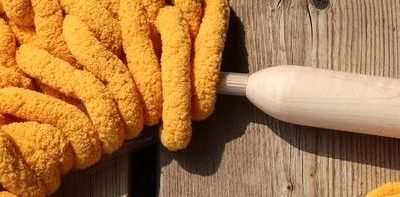
Build Your Own Spinning Wheel

At long last the plans for the Indian Head spinning wheel are now in store. Crikey, they’ve convert old sewing machine treadle to spinning wheelbeen a long time in coming!

With twenty nine detailed drawings , together with numerous close-up photographs and an informative description of the project, this package contains all you need to know in order to convert an old cast iron sewing machine treadle into an heirloom spinning wheel.

Download Your Set of Spinning Wheel Plans Now

spinning wheel plans, build your own

The treadle-mounted Indian Head spinning wheel is ideally suited to turn out heavy/chunky yarns, however, that does not mean it cannot also produce the finest of yarns.  The heavy flywheel and huge orifice though, allow the lumps and bumps of art yarns to easily draw through.

To the best of my knowledge, these machines have never been commercially produced and yet there are dozens, if not hundreds of them in daily use.  Each machine is unique and these plans guide the home builder to select the features they like and incorporate them easily into their own versatile  spinning wheel.

As usual, the many hours spent in creating these plans have all been dedicated to the rescued llamas and alpacas in the Llama Sanctuary and all proceeds from the sale of these plans go directly to supporting these wonderful creatures.  Thank you for helping them!

Click Here to Download the full package of plans, photographs and detailed information to build your own spinning wheel.

The Art of Dyeing Natural Fiber – Part 1

dyeing yarn, how to dye wool

The process of dyeing fabric and fiber remained a mystery to me for many years and deliberately so.  I remember when I was just married (and I was VERY young when I married), buying one of those small aluminium containers of dye from the local shop, with the intention of transforming a couple of old bed sheets that had become grey from years of hand-washing, into beautiful pink sheets that looked just like those in the advert.  What a disaster!  The sheets looked like they had been tie-died and to add further insult, they bled their new blotchy colouring onto night clothes and mattress and continued to bleed dye for many months afterwards.  That single incident etched into my head the notion that do-it-yourself dyeing is a mugs game and must be avoided at all costs.

Well, a few decades later, having matured in body, mind and soul, I understand that dyeing doesn’t have to be like that.  Before I go any further, let me say that I am definitely not an expert on dyeing.  Yes, I have dyed a LOT of wool and animal fiber, but I don’t dye many other things …especially bed sheets!  If you want to learn more about fabric dyeing, then you’d best look for another source of information.  Natural fiber dyeing though, I might be able to help you natural dyesthere or at least I can show you how I go about it.

Firstly, there are some basic principles that must be observed to ensure a successful and permanent colour uptake: heat and mordant.

I don’t remember exactly what steps I followed all those years ago, but with very limited space and resources and definitely no facility to bring a large pan of water, sufficient to contain two bed sheets, to a steady heat, I am not in the least surprised that it was such a failure.  Washing machines were luxury items then.  Crikey!  That makes me sound really old, but it is worth noting how quickly luxuries have apparently become necessities.

Types of Dye

RIT

RIT is probably the name that forms on the lips of most people who have contemplated  dyeing an article of clothing.  RIT dye is widely available; you’ll find it on the shelves of most hardware and even grocery stores.  RIT used to be full of nasty substances, but these days the company claims to be more environmentally friendly.  Being a bit particular in that area, especially as the water will end up flowing into our septic tank and ultimately out into the soil, I would rather be absolutely sure of what I’m using. I do my best to keep inedible chemicals out of my living and growing space.

Lanaset

Lanaset produces a wide range of colours and also claim to be non-toxic.  However, we need to be clear about what non-toxic actually means.  If the instructions suggest that you need to wear a face mask, gloves and even goggles when handling the powdered dyes, then they are clearly, potentially injurious to your health and with the exception of food dyes, these precautions should be used when handling ANY powdered dye.

Greener Shades

I have found Greener Shades offers a little more reassurance as to the low-toxicity of their dyes.   The down side of Greener Shades is the small quantities by which they are sold and consequently appear to be relatively pricey.   I have however, used them extensively, I like them and I feel more inclined to trust them.

immersion dyeing natural fiberKool-Aid & Food Dyes

I also use food-grade dyes, which are not only bright, but supposedly edible.  I wouldn’t advise slugging back an entire bottle of blue cake dye though, but I have less cause for concern when using my cooking pots for both cooking and fiber-dyeing.  One of most popular food dyes is Kool-aid; you know, that powdered stuff that can be made into drinks?  I’m afraid you will never  catch me drinking it, but it does come neatly packaged with its own mordant and in a nice range of flavours and I’m quite happy to mix it up, paint it onto wool and flush the residue down the sink.

Interweave Store

Heat and Mordant

Words of such importance I shall say them again – heat and mordant.  Heat and mordant.  To fix the colour you need heat and a mordant.  Derived from the French ‘mordre,’ meaning ‘to bite,’ a mordant ‘bites’ into the fibre ensuring that the dye is well and truly fixed to it.  Mordants are usually acids and although commercially produced mordants are available, once again, I prefer to stick with the things I can trust, usually in the forms of citric acid and vinegar.

Mordant

Citric acid can be found in most drug stores, chemists or whatever you like to call them, but if you have a bulk foods shop nearby, you might find it cheaper, without all the fancy packaging.  Any type of vinegar will work, but hold on to your fancy wine and apple cider using a steam bath for setting dyevinegars and pick up a container of pickling or cleaning vinegar.  Pickling vinegar contains around 7% acetic acid, whereas the regular white vinegar contains 5%.  The price is usually about the same, but since you will need to use less of the 7% vinegar, than the 5%, go for the pickling stuff.  Some shops also stock cleaning vinegar, which may be as high as 10% acetic acid.  Do your own comparisons, remembering that, the stronger the vinegar, the less you need.  We’ll talk about quantities in the next post.

Heat

Heat can be applied in a variety of ways, including complete immersion in hot water, simmered over a low heat, as well as steaming and microwaving.  The immersion method is great, because you can see when the dye in the bath has completely exhausted.

Stand a kitchen thermometer in the pan.  You want the temperature to remain between 120 and 160 degrees Fahrenheit.  If the water boils, the fiber can become too agitated, causing felting and if it’s too cool, the dye won’t hold.

Steaming works well, since the fiber is not immersed in water, it is less likely to felt.  The down side is that you cannot see the when the dye has exhausted.

dye natural fibreI detest microwave ovens and would never use one for heating food. However, it is a very quick, cheap and easy way to set the dye and I confess to making a concession to my rule of living in a ‘microwave-free home’ and actually invested in a microwave (it cost all of $3 from a thrift store).  The microwave lives a good distance from our living space and is only ever used outdoors.  A bit odd perhaps, but that’s who I am and proud of it.

In our next installment we will cover the basic steps of how to dye a skein of yarn.

‘Show of Feathers’ Wins The Competition

It Won! – ‘Show of Feathers’ – The Winner of The Latest Secret Stash Competition

I know I’m ‘blowing my own trumpet,’ but it does feel good to win, even if the only prize is recognition.  Then again, that’s what Fibre Arts Bootcamp is all about: developing awareness of the fibre arts, promoting the use of natural fibre and raising money for the Llama Sanctuary, and if winning a completion achieves all of that, then I ought not to feel too guilty about honking my horn in public!fibre art, peacock, needle felting

Organized by Arlene Ciroula from Spin Artiste  , this competition is designed to stretch the imaginations of fibre artists, by presenting them with a package of materials from which they must create something in a given amount of time.  All the entrants receive a similar package.  Although item colours may vary slightly, the materials are the same.  Usually it’s natural fibre, in one form or another, but the package usually contains a ‘wild card,’ something that you wouldn’t ordinarily find in a craft cupboard or an art studio.  This time, it was a coil of used baling twine and a bunch of emu feathers.

Here’s what happened:

When the package arrived, of all the items, it was the shiny blue baling twine that leapt out, crying “Me, Me, Me.”  This was in direct contrast to the images that had formed in my mind, having seen the photograph of the contents on Spin Artiste, prior to their arrival.

blending board, rolags

Colourful Rolags Formed on the Blending Board

Feeding thirty llamas and alpacas during the winter, we accrue a lot of baling twine and in addition to the million and one other uses to which it is put around the Sanctuary, I’ve used it quite a lot in my artwork.  This time though, I wanted to do something really special with it.

Teasing open short lengths of the twine with a flick carder, I then worked them on the drum carder, whilst holding one end and kept working it until the end became feathery.  Only then could I see what it wanted to become!  Further manipulation with a fine flick carder, not only created the fluffiness, but also lightened the hue and brilliance.  I wanted some shimmer, but not gaudy glitter.  It is incredible how much the small loop of baling expanded, once it had been flicked for a few minutes.  I even had some left over.

The background was formed by creating a wet half felt from the black roving, with more of the roving used to build up the substance of the peacock’s body.  The brown yarn was Navaho plied and then cabled to create a lumpy bumpy texture which was needle felted into place to create the ground.

The core of the peacock’s head was fashioned from the remainder of the brown yarn, using a felting needle, with a little black roving to cover.  No white fibre was provided in this kit; however, there was a tiny scrap of white yarn used to tie the hank of brown yarn and this was carefully overlaid to create beak and face.  The glint in the eye came from an un-dyed sliver of baling twine; a rare and lucky inclusion indeed!

fiber artist, competition, baling twineThe Suri locks offered themselves to be the feet and claws, as well as adding substance to the roundels, with which I had great fun.   The coloured merino rovings and suri locks were blended on our newly designed blending board to form dense, yet hollow rolags.  These were then sliced and needle felted into place over the emu feathers, then, like vol-au-vents, each was filled with a thin felted pad of black roving and finished off with a gem of blue baling twine.

David made the white, wooden frame to support the picture, which I have counted as my single addition in the project.  Although, one of our llamas believes himself to be quite the peacock, he refused to ‘strut his stuff’ before the camera, while we were photographing the picture.  He would have made the perfect backdrop!

Tools and techniques used: drum carder, blending board, Indian Head spinning wheel, wet felting, needle felting, flick carder.

The diversity of creations in the competition was amazing, as was the imagination and standard of work.  People felted and decorated delightful hats, scarves, a purse, a dream catcher, an art yarn, together with an array of art pieces that crack open a little window onto the unlimited potential of the human imagination.

This may sound weird, but I truly believe that the fibre knows what it wants to become.  Perhaps one of the most important lessons I’ve learned from these competitions is that spending a little time, just sitting with the material and allowing your mind to wander, can move you into a different dimension, where creativity is waiting to speak to you.  That is the goal of all artists, to be at once both art and artist.  A few years ago that would have sounded like cliché to me, but now, I know there’s something to it.  I only wish I could live in that space forever!

Sound scary?  Have a go!

Spinning Out of Your Comfort Zone

Inspirational quotes can be enormously powerful if we refer to them regularly in our everyday lives.  Much like resonating with the vibrations of a tuning fork, when we find a quote that strikes the perfect note within us, we can be driven to stretch ourselves; break fiber art sculpturesout of our comfort zones and try something new and outrageous.  Without such inspiration, we happily abide in the tiny cocoon of what we know.  One of my favourite quotes and one that I knew had to be included in The Llama Sanctuary 2013 Calendar (you can still grab a copy for free here) is by an unknown author, but no less powerful for that:

 “If you want something you’ve never had, you have to do something you’ve never done.”

Magnificent breakthroughs occur when people are aroused by visions or greatly inspired by something  or someone, and are prepared to do whatever it takes to turn those visions into reality.

Learning anything new (do you remember your first driving lesson?), can be daunting, spinning art yarn for textureexciting, disappointing, uplifting and downright depressing and sometimes we have to be inspired or even pushed into doing something we’ve never done, in order to become better people.  Arlene Ciroula from www.spinartiste.com organises a regular competition called Secret Stash, designed to stretch the imagination and test the skills of the fiber artist.  Entrants receive a package of materials in the mail, with which they have to design and create something, within a set period of time; usually within a couple of weeks.

Of course, that’s not the way most artists operate.  Firstly, you come up with an idea, then you plan the project and gather the materials required.  That’s the usual sequence.  Having a pile of materials placed in your lap and be told to make something that people will like may be enough to put a spin in your knickers!

secret stash, inspirational fiber art

Each entrant receives a package in the mail containing fiber in several different forms & types, as well as something weird or unusual

That’s what we’ve been playing at over the last few months and it really is fun.  Our first project didn’t attract any notice whatsoever.  Disappointing perhaps, but I am utterly amazed at how much I learned, not just about fiber working, but about planning and the more conceptual elements.  I generally have a good idea of what each fiber is capable, but the competition opened my eyes to a level of design, to which I was unfamiliar.  I spent many years designing and manufacturing clothing, both sewn and knitted, but as I look back, I am aware of the limitations I had imposed upon myself.  Strict, self-imposed limits were placed on design, according to what I knew would sell in our shop.  Of course, that limited the way our customers saw us.  At the various fashion and cloth shows, we would ooh and aah over new textures and startling colour schemes, but almost invariably, we stuck to what worked, because we needed to make money.

I didn’t realise until recently, how imposing limitations on the design level, affects every other aspect of life.  We place ourselves in an orbit of familiar surroundings.  We may experiment with different types of food and then consider ourselves daring, but we must still hang on to something familiar, in order to do so; familiar surroundings, familiar people, familiar crockery even! Take someone to a foreign country, with alien customs and diet and tell them that they must eat in primitive surroundings and most people will feel very uncomfortable.  That’s for adventurers!

Well maybe it’s time to have some adventure yourself, find ways to stretch your own creativity; expand your own knowledge; try something completely different.  If you enter into such an adventure with a completely open mind, I know that you will surprise yourself.  You are capable of doing anything.  If you say that you can’t, then you’re right.  If you say that you can, you’re right.  Fear is the only difference.  Let go of all those little fears and do something outrageous today!

Our first Secret Stash project forced me to explore texture and shape, since the package consisted almost entirely of natural cream fibre in various forms.  I even explored crochet with copper wire.

crochet with copper wire, wire crochet sculpture

My First Crocheted Wire Sculpture